

How are the world’s most endangered species ending up in private wildlife collections?
By The Fourth & Izzy Sasada
Last Updated 13 April 2026
The global wildlife trade has already pushed species to the edge. From ‘talking’ parrots to rhino horns, the demand for wild animals and their body parts has repeatedly driven species towards near-extinction.
In response, an international system was created to regulate trade in the species most at risk.
When it comes to international wildlife trade, the industry guidebook is CITES – the Convention on International Trade in Endangered Species of Wild Fauna and Flora.
CITES Appendix I status is given to species where trade is a significant threat to population numbers; many primate and big cat species are under Appendix I. The commercial, international trade of species under Appendix I is prohibited.
The Fourth and environmental journalist Izzy Sasada spent the past few months investigating how Appendix I species are ending up in private collections.
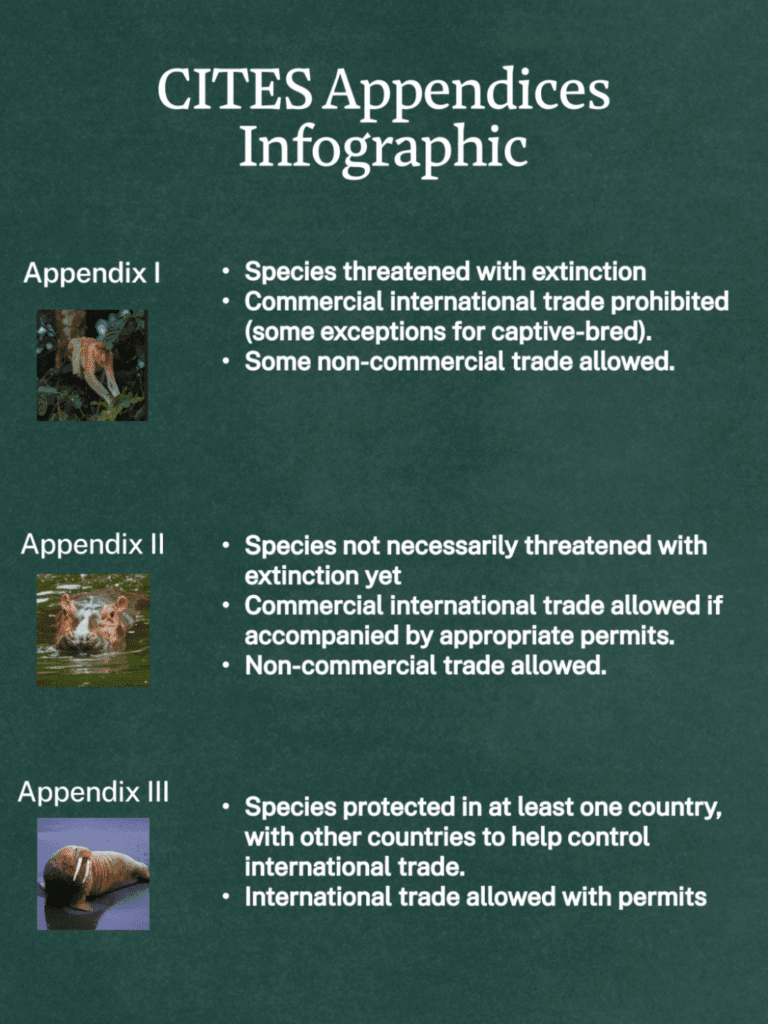
Despite these guidelines, there is a growing pattern of endangered species being obtained by private collections through loopholes in international regulations.
The scale and speed of the accumulation of endangered animals for some collections is causing alarm among conservationists and wildlife trade experts.
“We seem to have a huge sea-change in the wildlife trade, from dead trophies, to live ones,” says Debbie Martyr, a wildlife conservationist who specialises in endangered cats.
For example, Asian golden cats are one of Indonesia’s most elusive cat species, native to jungles across Southeast Asia.
They are hard to observe in the wild and considered amongst conservationists to be difficult to breed in captivity. But now, a handful of them have ended up in a private zoo.
So, how do such collections acquire vast numbers of endangered and protected animals, without breaking international regulations?
“Z” is for Zoo
One of the answers lies in a single code-letter on a CITES permit: Z.
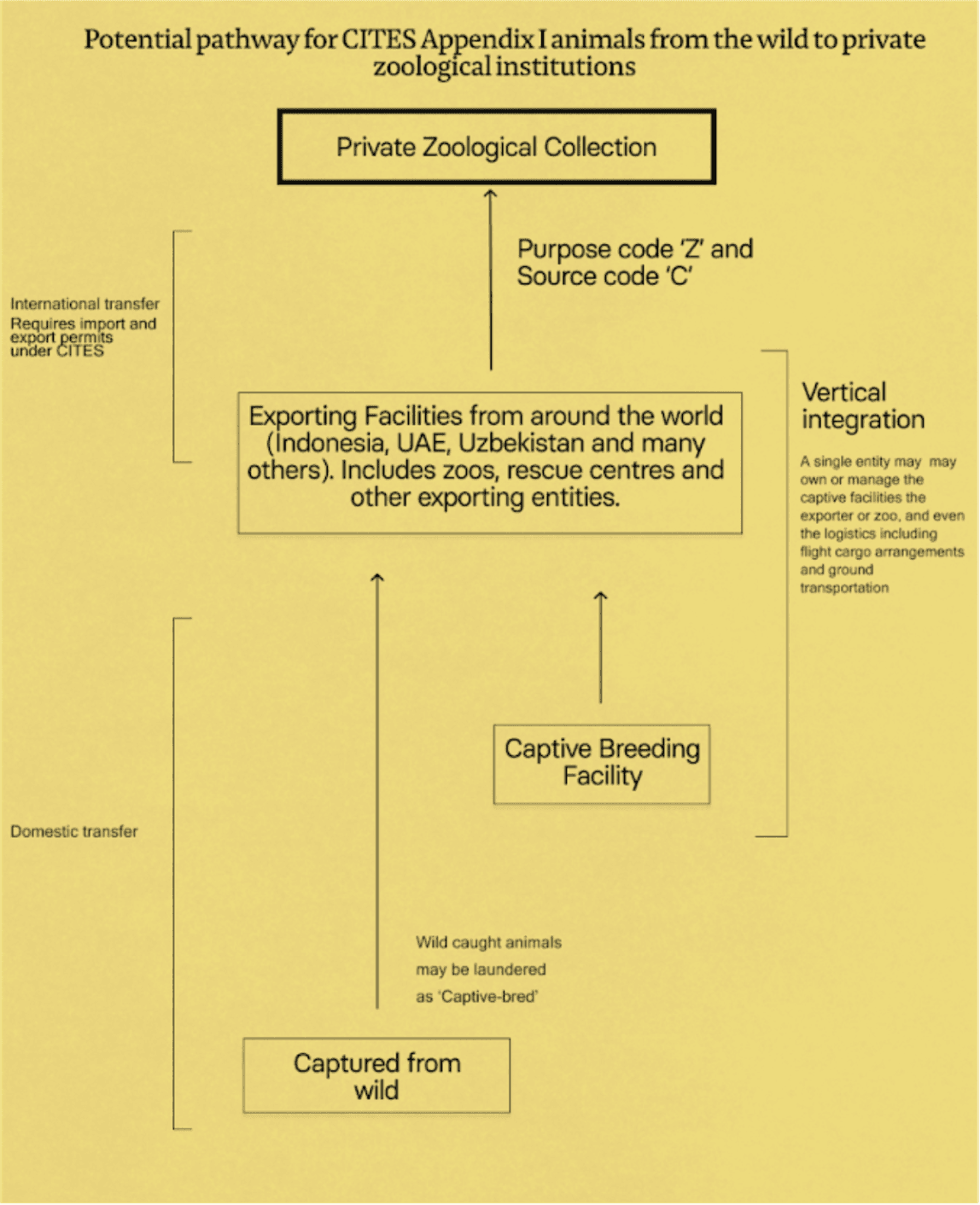
If an animal is transported under purpose code “Z”, meaning it is being imported by a zoo, the transfer can bypass Appendix I regulations, which ban commercial international trade.
“Under CITES, animals that are exported for zoological collection purposes are not considered to be primarily commercial,” says Mark Jones, Head of Policy at Born Free Foundation.
“And that’s controversial, but it’s how it is at the moment.”
The problem lies in the murkiness of what is classified as a ‘zoo’.
“There’s no single global definition of a zoo,” says Jones.
Whilst obtaining zoo status can be key to acquiring Appendix I animals, zoo accreditation is determined domestically, and standards of scrutiny differ from country to country.
Zoo accreditation has previously been afforded to entities with poor animal welfare standards.
For example, investigations by the Environmental Investigation Agency indicated that tiger farms in Laos continued operations by converting to zoos, even after an international ruling that tigers should not be bred for trade in their parts and products.
In short, while commercial international trade in Appendix I species is prohibited, these endangered animals can still be moved across borders for what are deemed “non-commercial” purposes, including transfers to zoos.
The ‘C’ Word: Captive-bred
Captive breeding is controversial in the world of conservation. Some view it as a means to sustain populations, others question its efficacy if unaccompanied by habitat protection.
One way the commercial international trade of Appendix I animals can take place is through CITES-registered captive-breeding facilities.
For private zoological collections, where animals are transferred using the “Zoological” purpose-code (rather than for ‘commercial’ purposes), it’s preferable to obtain animals labelled as captive-bred.
This is because capturing Appendix I species from the wild is restricted or prohibited in many countries. For conservation facilities, sourcing animals from the wild can be damaging to their reputation.
For example a legal capture of a giant manta ray destined for Seaworld in Abu Dhabi in 2025 for “education and exhibit” purposes sparked outrage in Florida. Likewise, the recent launch of “Sloth World” was criticised for the apparent wild-sourcing of sloths from Peru and Guyana.
As such, many Appendix I animals transferred to zoo collections have “C” on the source-code of their CITES permit, meaning they have been registered as captive-born, to captive-bred parents, instead of wild-caught.
However, conservationists have flagged that it can be difficult to verify whether a supposed captive-bred animal was not actually caught in the wild.
“Traders who wish to export, can claim the animal is captive bred,” says Iris Ho, who is Head of Campaigns and Policy at the Pan-African Sanctuary Alliance (PASA).
“If you have a willing party in the CITES authority who is not doing his due diligence, it’s very easy to use the ‘captive’ source code, even if it’s a wild caught animal.”
There are instances where CITES Appendix I animals have been exported with permits as “captive-bred” despite a lack of plausibility that genuine captive breeding could have taken place.
In 2025, orangutan conservationists were alarmed to see the export of a tapanuli orangutan to India from the UAE, with its origin listed as “captive-bred” from Indonesia.
Tapanuli orangutans are the most endangered ape species with fewer than 800 individuals thought to exist; there are no known captive-breeding facilities in Indonesia.
Such discrepancies may also stem from inaccurate or incomplete records in permits issued by importing and exporting countries. At the very least, these cases indicate a lack of due diligence.
We asked the CITES secretariat what steps are taken to determine if an animal with a “C” source code was in fact bred in captivity. We received no response.
In 2023 and 2024, CITES records show 13 Asian golden cats originating in Indonesia being exported to India. All were traded using the “C” code.
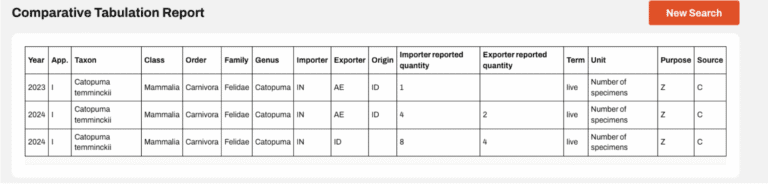
“They are super super shy and scared of people,” says Femke Den Haas, who founded Jakarta Animal Aid Network.
“They really don’t cope well in captivity.”
European captive breeding programmes have faced challenges with attempts to breed this animal too.
“Breeding Asian golden cats in captivity is not easy and still rare. Even if you have established a pair, breeding is not easy,” says Sandra Reichler, the EAZA Ex-situ Programme (EEP) coordinator for the Asian golden cat.
According to Reichler, of the 19 kittens born in European zoos since 2010, only 12 survived.
While it is not impossible that many such animals were indeed captive-bred, the pattern suggests that facilities capable of producing Appendix I species in significant numbers may be supplying a growing demand from zoological entities.
Mega-collections may present publicly as conservation hubs or rescue centres.
But according to conservationists and investigators, animals are being sourced precisely because a wealthy buyer awaits at the end of the chain.
They warn that this new demand risks generating a lucrative market for traders skilled at navigating legal loopholes.
“This is the opportunity for these traders including traffickers who have been involved in animal trade for so long… but now they have wealthy individuals looking for animals,” says Iris Ho.
A global supply chain
Private zoos can draw on a global network of suppliers to acquire CITES Appendix I animals.
Some of these exporters are highly organised and sophisticated, operating through vertically integrated networks.
The network typically begins with a facility that is domestically licensed to hold or breed Appendix I animals.
They may own or work with a separate licensed zoo or exporter which is able to secure the documentation required — via authorities — to legalise the movement of animals across borders.
Now that the animal supply is secure, the next step is to fulfill the delivery.
To do this, the network needs logistical capabilities, such as ground and air transfer operations — which some exporters own themselves.
Essentially, a one-stop-shop for all your wildlife collector’s needs.
CITES: A Flawed Global Framework
CITES was created in 1973 and entered into force in 1975.
For many years, CITES has been among the conservation agreements with the largest membership, with 185 Parties in 2026.
But it also appears to be heavily reliant on country-level regulations and vulnerable to exploitation
“Much of the CITES system is based on trust when it comes to captive breeding. But if you have people manipulating this, it’s a problem,” says Martyr.
Despite these challenges, conservationists like Iris Ho, emphasise that CITES remains an essential global mechanism, and that efforts to combat wildlife exploitation must ultimately work within the system that exists.
“Whenever it comes to CITES and other international biodiversity measures, there are always frustrating developments,” Ho says.
“But we still have to pick ourselves up and find ways to use the tools the best that we can to protect animals and to stop exploitation of wildlife.”
WATCH THE FULL DOCUMENTARY BELOW
want more content like this?
We’re a team of award-winning investigative journalists and video creators. We believe investigative journalism is critical in building a more just world.
Support our work as a paid subscriber, and receive regular insights and event invites from our team.
